Collections
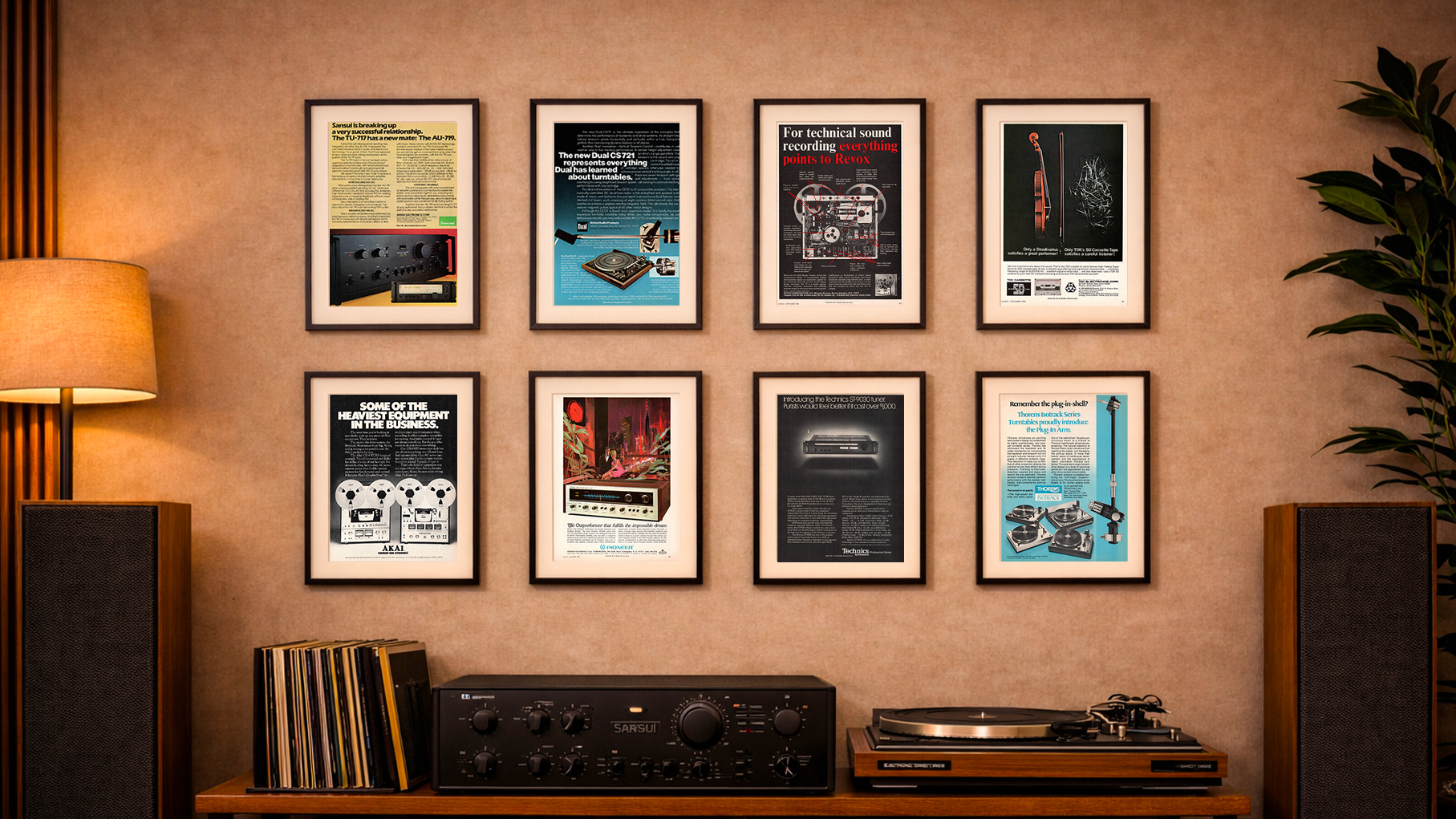
The advertisements featured throughout Sonic Rebel span more than two decades of audio history, from roughly 1967 through 1990. During that time, hi-fi evolved from early solid-state stereo systems into highly refined component setups and eventually into the first wave of digital audio.
These collections group the archive into four broader periods that reflect major shifts in design, technology, and listening culture. Each era tells a different part of the story behind classic hi-fi and the visual language used to sell it.
The Birth of Modern Stereo
1967 – 1972
This period marks the shift from console stereos to dedicated component systems. It is called the birth of modern stereo because early solid-state designs began shaping the look, function, and identity of hi-fi for years to come.
The Receiver Era
1973 – 1977
This period is known as the receiver era because stereo receivers became the centerpiece of countless home systems. Competition increased rapidly as brands pushed power, features, styling, and value to win attention in a growing market.
The Golden Age of Hi-Fi
1978 – 1983
This era is often called the golden age of hi-fi because systems became more specialized, ambitious, and performance-driven. Separate components, serious speaker design, and stronger audiophile identity defined the period.
The Digital Transition
1984 – 1990
This period is called the digital transition because Compact Disc and digital audio began reshaping the market. At the same time, analog equipment continued to mature, creating a unique overlap between old and new formats.